
What Happens When You Open the Oven Door during baking?

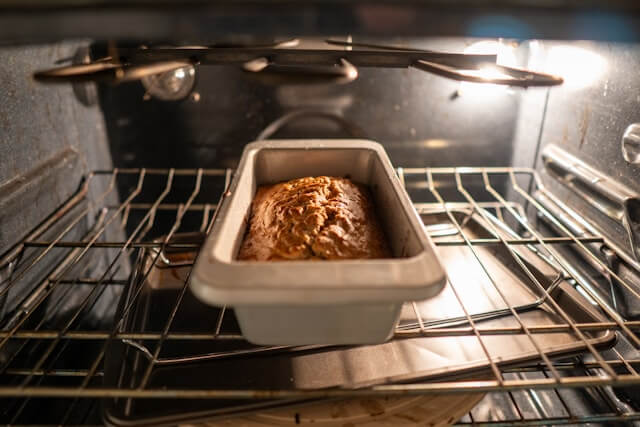
You followed the recipe step by step. You preheated the oven properly and measured the ingredients carefully. You did everything right, but still your cake sank in the middle, your bread didn’t rise properly, or your cookies came out with an uneven texture.
So what is the real issue here? You are not doing anything wrong here. We have all been there, and baking failures are surprisingly common. In most cases, the problem is not the recipe; you may be opening the oven door too often.
Every time you open the oven door while baking, it releases a lot of heat stored inside the oven, making it very hard for the baked goods to rise, set, and bake properly. In fact, temperatures can drop by 25°F to 50°F or more during a short period, depending on the oven and how long the door remains open.
Well, the good news is that a quick peek doesn’t always ruin your baking. In this guide, you will learn what is actually happening inside the oven, which baking goods are most affected, and when it is safe to take a quick peek.
Why You Should Not Open the Oven Door When Baking?
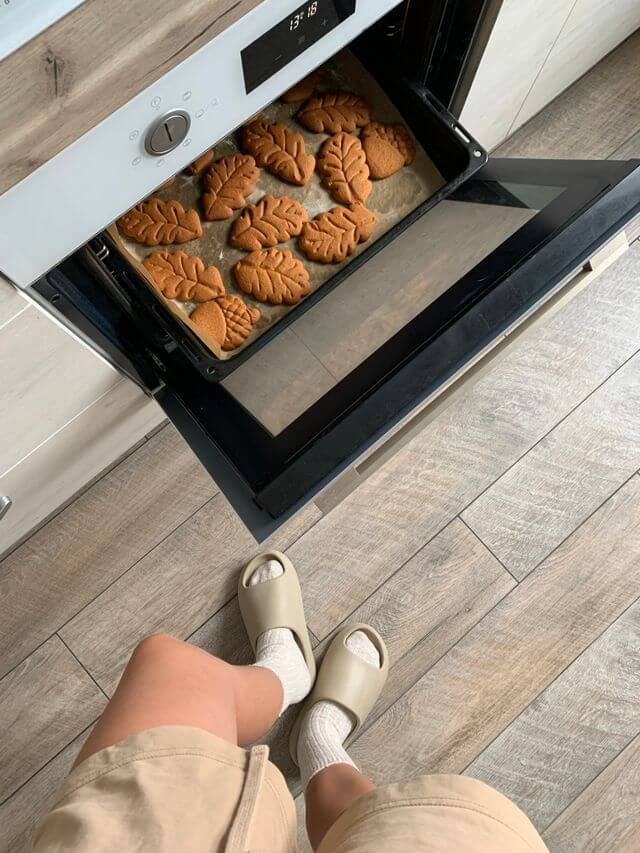
Whether you are baking bread, cakes, cookies, or muffins, the rule applies to all. Keep your oven door closed.
The reason is very simple. Baking is all about consistency and uninterrupted heat. Think this way: you spent almost an hour preheating your oven and keeping it at a stable temperature. Now your baked goods need that stability to rise, set, and develop their structure properly.
For instance, think of your oven like a sauna. The moment you open the door, the hot air goes out, and the temperature begins to drop. So the same thing goes with your oven. The moment you open that door, you literally break the environment. And baked goods are far more sensitive to that than most people realise.
This same principle applies to almost all baked goods. Even when baking a loaf of bread, cookies, or a birthday cake, consistent heat and a stable temperature are what give you the baking result.
What Actually Happens When You Open the Door?
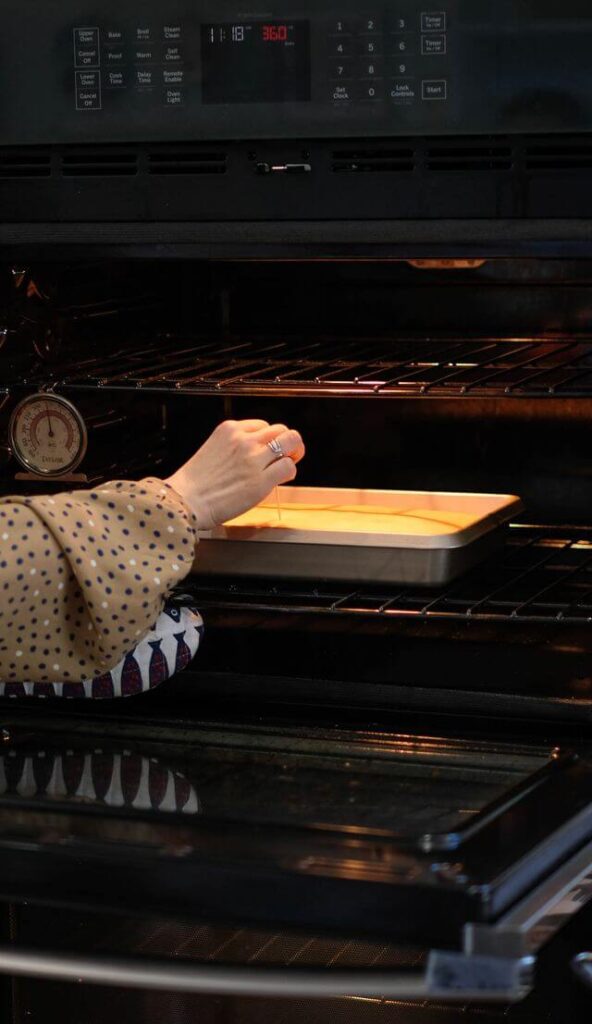
The moment you crack open the oven door, you may not realize it, but several things are happening inside.
The hot air stored inside rushes out almost instantly, and the internal temperature can drop by around 25°F to 50°F, or more, especially when you are using a very old oven with worn-out seals. And the recovery time takes even longer.
If you’re not sure whether your oven is displaying the correct temperature, it may help to check whether your oven temperature is accurate.
In most cases, ovens take around 10 to 15 minutes to recover and stabilise their temperature, but it depends on how long you have left the oven door open and the type of oven you are using.
However, heat loss isn’t the only issue here. Many baked goods rely on a stable temperature to rise and bake properly. As they bake, the air and gases trapped inside begin to expand, which helps to create a lighter texture and better structure. So the moment you open that door, the expansion is interrupted, and the rising of the baked goods slows down or becomes disrupted.
Even heat is also a major factor in baking. When you preheat your oven, hot air circulates evenly inside, and opening the door disrupts that flow. Since most of the hot air escapes from the front of the oven, the area near the door cools faster than the back, which can cause your food to bake less evenly.
So it is not a single problem. Three things are happening at the same time. A sudden temperature drop that takes time to recover from, an interrupted rise, and uneven heat distribution, all of which happen from just a few seconds of opening the oven door.
How Different Baked Goods Are Affected?
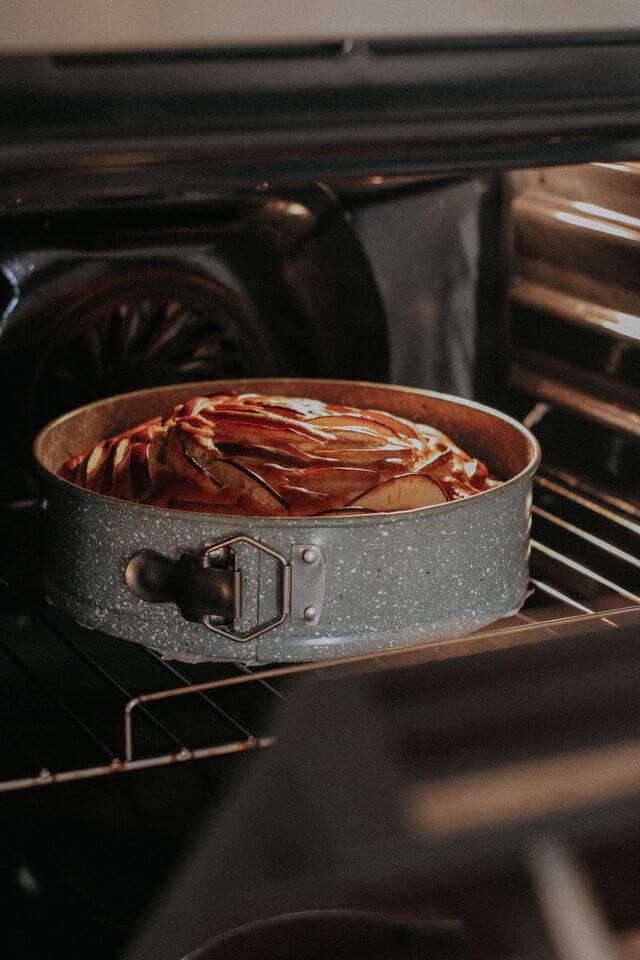
Now that we know what really happens when you open the oven door, let’s look at what happens to the baked goods and how it affects them.
Bread and croissants need steady heat during the first few minutes of baking so they can rise properly, and this rapid expansion is often called the oven spring. And when you open the door too early during that vital cooking time, it loses heat, and the loaf may not puff up as much as it should. So the result will be a dense and uneven loaf.
Cakes, muffins, and brownies work a bit differently here, but the idea is quite the same. They are also affected by sudden changes in temperature. They also need steady heat, like bread, so the batter can puff up properly and develop that structure.
And opening the oven door lets cold air in, which can prevent the cake from rising as it should. Your cake can be dense and may collapse. Muffins will sink in the middle and turn flat, while the brownies will develop an uneven texture, leaving a soft center.
Cookies are slightly different here. They don’t rise like bread and cakes. Their issue is more about steady heat so that they can spread, brown, and get that proper texture. So the oven temperature needs to be more stable, or else some cookies may spread or brown differently than others, leading to a less consistent texture.
When Is It Most Risky to Open the Oven Door?
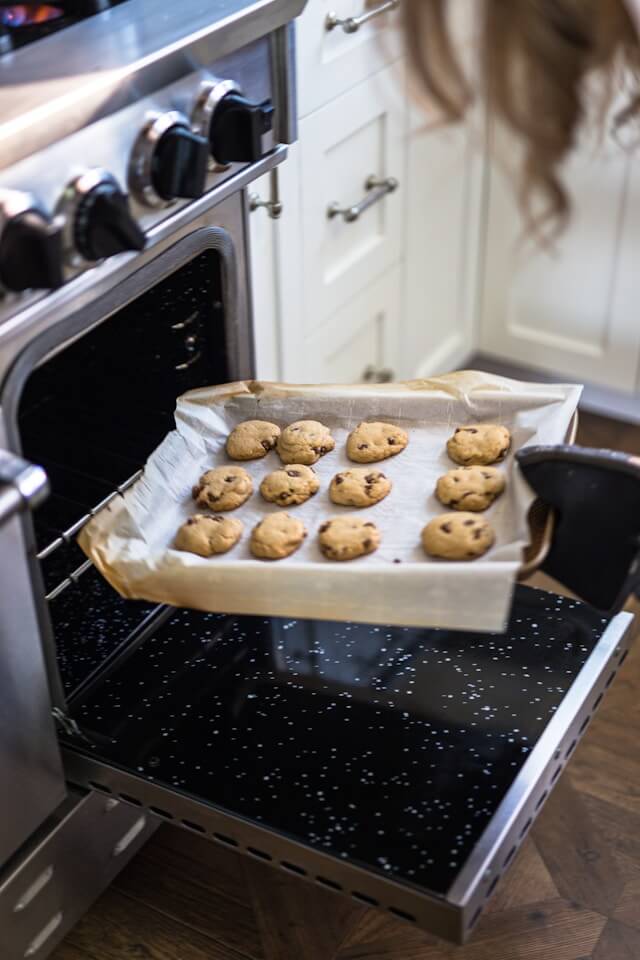
The timing is crucial, and not every moment of the baking process carries the same risk. So the question is, when you are opening the oven door.
Well, the early stage of baking is the most delicate. It is the oven spring period, when batters are still rising, and the structure is developing. Now is the worst time to open the oven door because you are interrupting the very process that gives it its shape.
If you are baking bread, muffins, or cake, the first 15 to 20 minutes usually matter most, but it can also depend on your oven and the recipe you are following.
The middle stage of baking is okay, but still a bit risky. By this point, most of your structure has already formed, and the risk of damage is quite low, though it is still present, and you might even end up with uneven baking.
The last stage is the safest window here. Once your bake has almost got its structure, a quick check won’t do any harm. But I am only talking about the 5 to 10 minutes of the last baking period.
However, there is one exception. If you are baking a crusty loaf of bread, some bakers briefly open the oven during the first few minutes to add steam and help develop a better crust. A few seconds won’t hurt much, but this one is specific; otherwise, the rule still stays the same.
How to Check on Your Baking Without Opening the Oven?
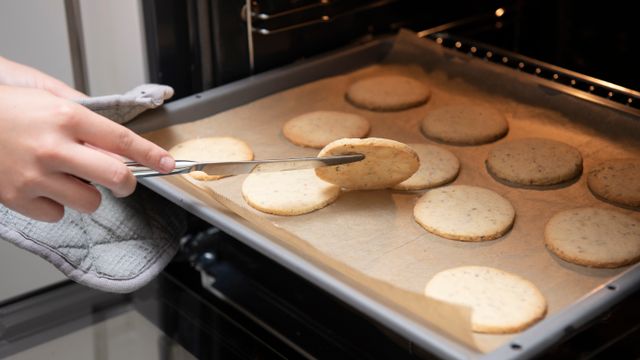
There are a few simple ways to check how your food is baking, and the good news is you don’t even need to open the oven door.
The simplest way is to use your oven light. Most modern ovens have an interior light and a glass door window, so you can turn on the light and check your baking without opening the oven.
Sometimes, grease, smoke, or oil can get stuck on the oven window. It might get hard to see it through, so try to keep it clean more frequently.
But how do you actually know that your baked goods are doing well? Well, there are some clues. If you are baking a cake, look at the top and edges. If it still looks wet or glossy, it needs more time. When it is almost done, you may notice the edges starting to pull slightly away from the sides of the cake pan.
In the case of cookies, the edges will turn a light golden brown, and the tops will no longer look wet and shiny. For bread, the crust will turn golden brown, and the loaf will look completely puffed up. For muffins, you will notice that the tops have fully puffed up and are no longer wet or glossy. You will see a light golden color on top and around the edges.
However, for greater accuracy, you can use a leave-in probe thermometer. Insert the probe into the middle of your cake, bread, or any other baked good, and it will display the internal temperature on the screen.
If the internal temperature reads around 190–210°F, your bread is usually done; for muffins and cakes, it will read around 200–210°F, depending on the recipe you are following.
Well, that’s it. These are the most reliable ways to check your food without opening the oven door.
When Is It Actually Okay to Open the Oven Door?
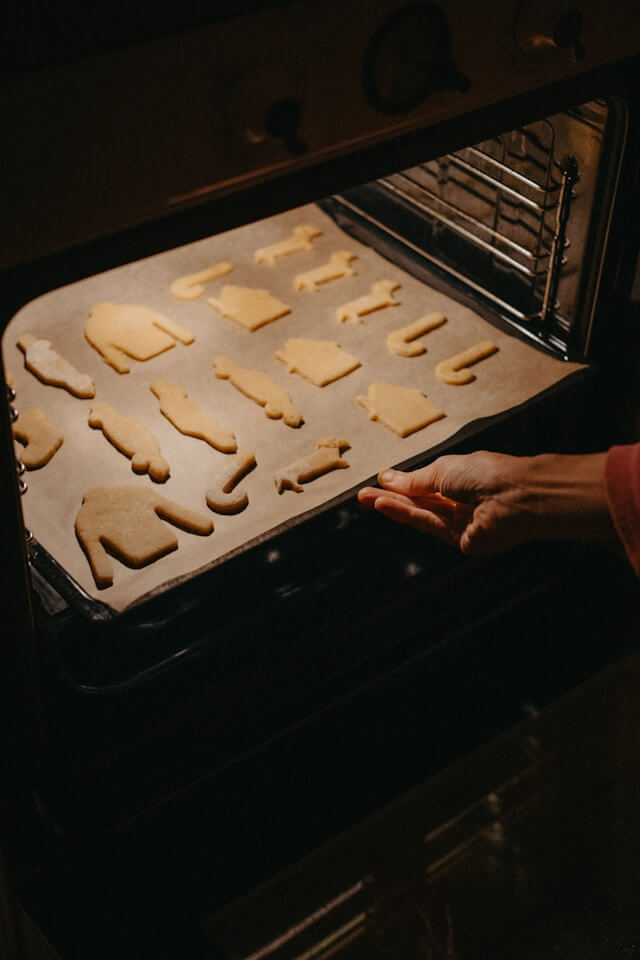
After covering everything we have covered so far, you might be wondering whether you should ever open the oven door. Well, don’t worry, it’s not quite true. There are still a few moments when opening the door is completely fine.
One of the best examples is steam when you are trying to bake a crusty loaf of bread.
Some home bakers add steam in the first couple of minutes of baking, which helps the bread develop a crispy crust. And since the dough starts to puff up as soon as the baking begins, if you try to take a quick peek by opening the oven door, it won’t affect the bread much.
And another safe time to open the door is when the food has mostly set its structure. To be precise, for cakes, usually by the three-quarter mark of the baking time, the cake will no longer look wet and shiny.
For bread, the time is usually when the loaf has almost finished rising, and you will notice the crust starts to turn golden brown. At this point, there is nothing to worry about too much, since the structure has already been built.
The safest of them all is the end of the last baking stage. This stage is when your baked goods are already done, and a quick check, like a toothpick test, checking color, or even confirming internal temperature, won’t cause any problems.
However, you should also know that not all ovens behave the same way. In simple terms, not all ovens lose heat the same way when you open the door. It depends on several factors, like airflow, insulation, and the condition of the door seals.
If you have a convection oven with a fan, heat recovery will be much faster. In an old oven with a worn-out door seal, hot air tends to escape more quickly, whether it’s gas or electric.
One quick note about broiling, since some home bakers confuse it with baking. Both are very different from each other, as broiling uses direct, high-intensity heat from the top of the oven, while baking uses a stable internal temperature for cooking. So the door should stay open or closed, depending on your oven. Check the oven manual if you are broiling often.
So it’s not about avoiding opening the oven door completely, it’s about opening it at the right time.
Follow These Simple Rules Every Time You Bake
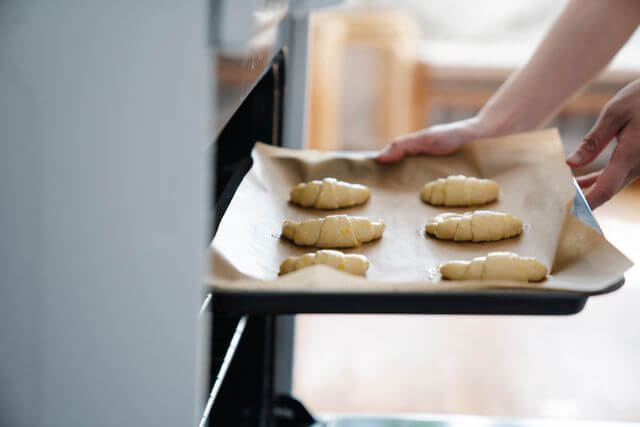
If you want to check on your baked goods, try to do it quickly rather than opening the door repeatedly.
At the end of the day, the rule is quite simple. Keep the oven door closed as much as possible while baking. If you open the door too early, the risk of uneven baking increases compared to when the food is almost done.
Here are some simple ways to check your food and the signs to look out for:
|
Baked Goods |
Avoid Opening Early |
Safe to Check |
What to Look For |
|
Bread |
First 15–20 minutes |
Once crust turns golden |
Fully risen loaf, golden crust |
|
Cakes |
First two-thirds of bake |
Once the top looks set |
Matte top, edges pulling slightly from pan |
|
Cookies |
Early bake |
Once edges turn light brown |
Golden edges, soft centers |
|
Muffins |
Early bake |
Once tops are fully puffed |
Domed top, no longer wet or shiny |
|
Brownies |
Early bake |
Once edges look set |
Firm edges, slightly soft center |
|
Croissants |
Early and middle stage |
Last few minutes only |
Golden, fully puffed layers |
And one more thing: these are just general guidelines, not exact rules to be followed, since not all ovens and recipes are the same.
Frequently Asked Questions (FAQs)
Does opening the oven door ruin a cake?
Yes, it can, especially if you open it early. If the door opens before the cake has set properly, the sudden temperature drop can cause the center to sink. And opening the door later, at the final stage of baking, is much less risky.
How many degrees do you lose when you open the oven door?
Not all ovens are the same; they can vary, but a drop of 25°F to 50°F or more is common, especially in older ovens or those with worn-out door seals. Most ovens take around 10 to 15 minutes to recover from heat loss fully.
Can I open the oven door while baking bread?
It depends on the baking stage. When the bread is going through oven spring, opening the door in the early 15 to 20 minutes can make your loaf go dense. So when the crust looks golden, a quick peek is usually fine. The same thing goes for baking a banana bread. The banana bread can also be affected by the sudden temperature drop, so it is best to wait until the loaf has mostly set.
Why did my cake collapse in the oven?
It usually happens when the door is opened before the cake’s structure has had time to set, which interrupts the rise and causes the center to sink. It can also happen due to common problems like underbaking or opening the door too often during baking.
How do I know when my bake is done without opening the oven?
Use your oven light and the glass window to check visual cues like color and surface texture. Most baked goods turn from shiny to matte when they finish, and a leave-in probe thermometer can confirm doneness without opening the oven door.
What happens if you open the oven door too early?
The earlier you open the oven door, the riskier it gets, especially in the early stages of baking. It can lead to dense or uneven baking results, but it also depends on what you are making.
Why should you not open the oven door when baking?
Opening the oven door while baking lets hot air escape, causing a sudden drop in temperature; if it happens too early, it can affect the rise and texture of your baked goods.
