
Why Your Oven Isn’t Hot Enough for Homemade Pizza Baking?

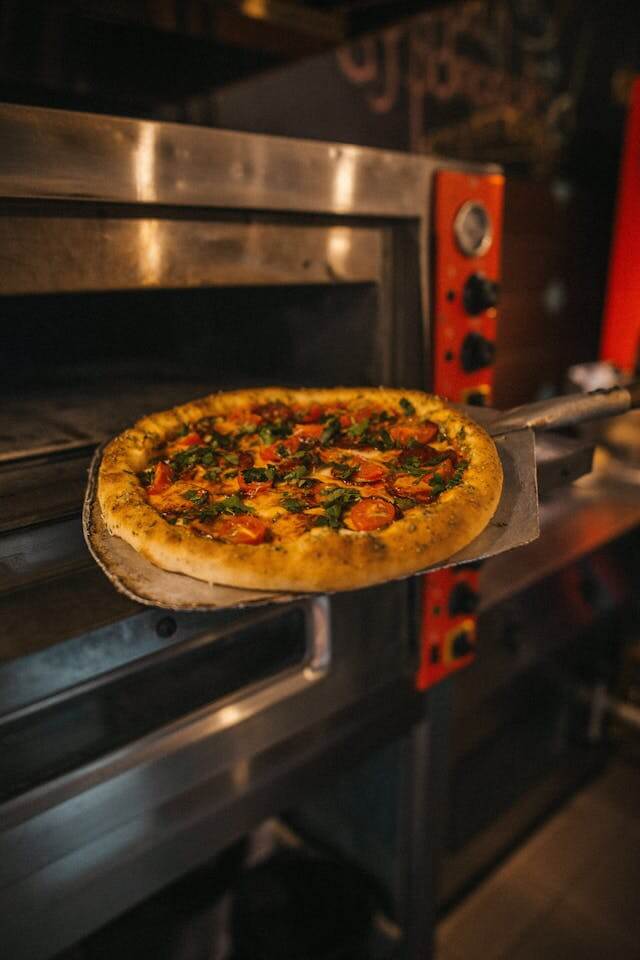
A few years back, when I tried to bake pizzas in my home oven, it came out decent but not great, unlike the results I get with my outdoor ovens. There were no problems with my pizza dough preparations or the recipe; it was simply that my oven wasn’t getting hot enough.
I could really see the difference. The pizzas weren’t crispy enough, and the texture didn’t feel right like a restaurant pizza should.
You see, pizzas need very high heat to bake properly, usually around 230–260°C. And if your home oven can’t reach that temperature, the crust will come out looking pale and soggy in the middle.
In this guide, I will explain why this happens and how to fix it.
Most home ovens can’t produce a good pizza because:
- The pizza oven temperature isn’t steady and keeps turning on and off.
- The oven sensor only measures air temperature, not the baking surface temperature.
- The hot air escapes every time you open the oven door.
- Most ovens often struggle to maintain a steady, high heat during baking.
What does “oven is not hot enough” actually mean for pizza?
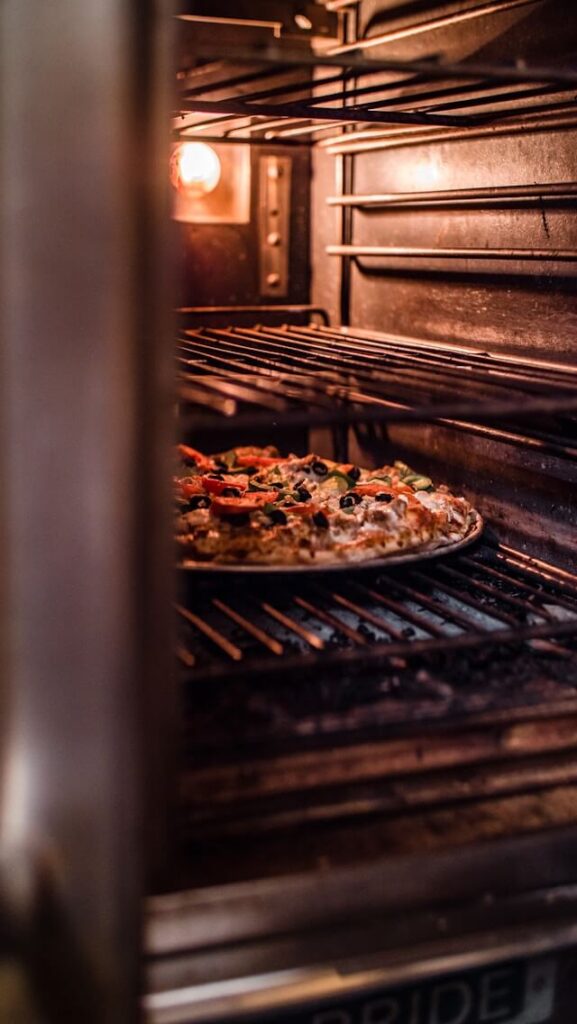
So what really happens when your home oven is not enough for baking pizza? Most foods, like casseroles, breads, granola, and caramel corn, bake very slowly and gradually, but pizzas, on the other hand, bake very quickly. The moment you place the dough on the hot baking surface, it needs to cook immediately to achieve the ideal crispy crust you desire.
In simple words, both the intensity and the speed of heat are essential for a pizza to bake properly in a short time.
Why Your Oven Struggles to Bake a Homemade Pizza Properly
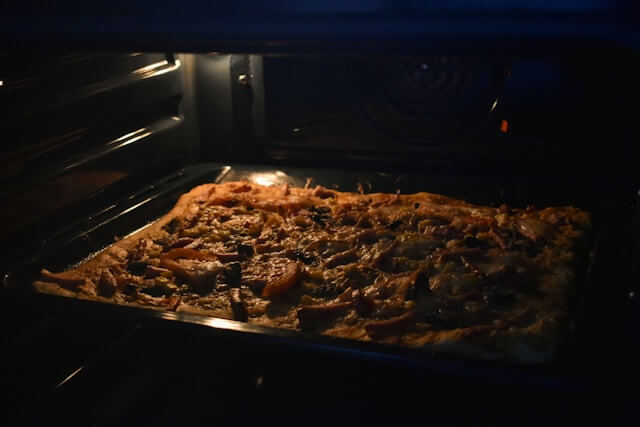
Many people use their home oven for everyday cooking but struggle with baking pizzas. To make a good homemade pizza, your oven needs a higher, more consistent heat, and this is where most home ovens fall short.
I am not saying your oven can’t reach that high temperature, but have you ever thought about whether it can maintain that steady heat?
There are some common reasons why your pizzas are not baking properly.
Why does the temperature of my home oven keep changing during baking pizza
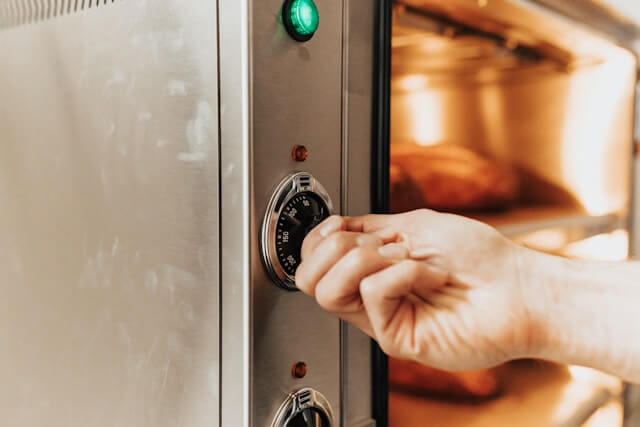
Domestic ovens often fluctuate a lot while baking; they can’t hold a steady temperature. The cycle tends to keep turning the heat on and off once it reaches the set temperature. The oven temperature is actually not constant.
Think like this: let’s say you set your desired temperature to 220°C, and once it reaches that temperature, it automatically turns the heating elements off. As a result, the temperature drops a bit, then turns back on to heat up.
The oven temperature fluctuates throughout the baking process. And the number on the oven display is just an average, not the exact temperature you set earlier.
However, this inconsistent number doesn’t affect other foods too much, but it affects pizza baking heavily. You might think it’s a small issue, but even small temperature changes can lead to uneven baking.
Why your pizza cooks unevenly, even at high oven temperature
There are many common mistakes people make when baking a pizza. But they don’t understand that a high-temperature oven doesn’t mean all the inside parts are properly heated.
Some parts can still be hotter than others, and this can lead to poor pizza-baking results. You might notice that one side of the dough browns faster, while the other sides take longer to bake.
Due to this uneven surface heat, a pizza may not bake equally, as you expect. So even if you have set the temperature correctly, the baking process can still be affected by where you place the pizza in the oven.
You didn’t preheat your oven long enough
Preheating your oven long enough is necessary for baking a homemade pizza. If you rush or skip this step, the inside of the oven will not be hot enough, and your pizza will come out soft and undercooked.
Using the wrong oven mode (bake vs grill vs convection)
When baking a pizza at home, make sure you use the right oven mode. There are different settings like bake, grill (broiler), and convection, and each works in a different way.
The baking mode is the primary setting we all use for baking pizzas. It delivers steady heat and works best for base cooking, but in broiler mode, I like to use it as a finishing touch. The broiler mode uses direct heat from the top, which helps melt the cheese and achieve better browning, but I highly recommend using it for 1-2 minutes, or the top will burn quickly. On the other hand, convection mode might seem like the best choice to speed up the baking process, but it is not ideal for the best results.
Weak oven insulation (cheap home ovens issue)
If you are using an old oven, you might be experiencing poor heat retention due to weak insulation. It makes it even harder to bake properly because the oven’s interior can’t retain heat.
Cheap home ovens often have thinner insulation, allowing heat to escape during baking. Another common but biggest issue is when you open the oven door. So, keep the door closed as much as possible and also give it more preheating time to maintain that heat.
Why Pizza Needs Higher Heat Than Other Foods
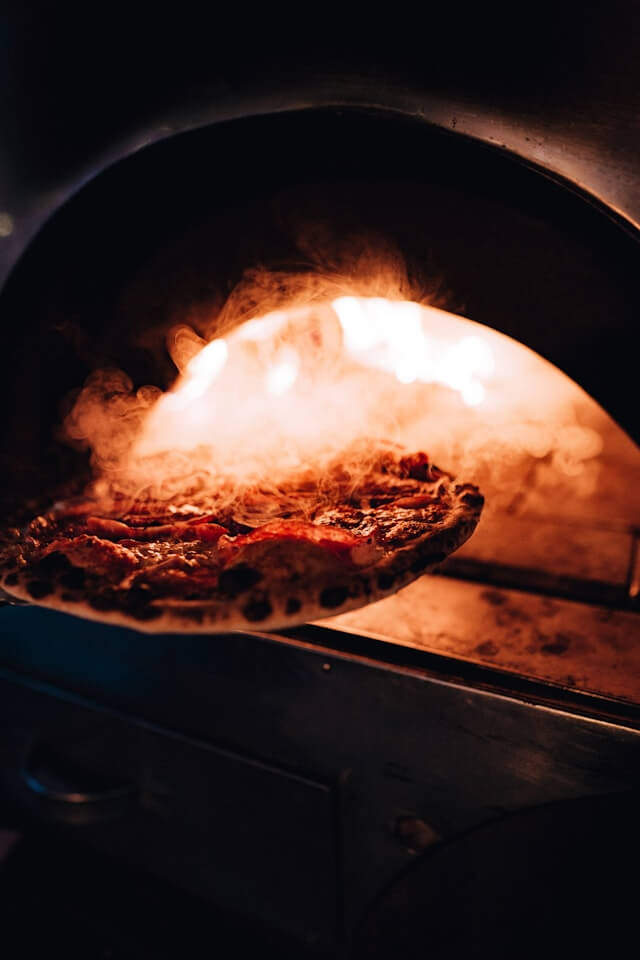
Pizzas usually cook in a few minutes because they need instant heat to bake properly. The dough requires that strong heat the moment it touches the baking surface so that the base can bake correctly.
And if the temperature of the baking surface is low, the toppings might cook much faster than the bottom, leading to a soft, soggy pizza crust, especially if you are overloading it.
There are different types of ovens, like traditional pizza ovens and standard home ovens, but the temperatures are not the same, which affects baking time and results.
- Traditional pizza ovens: These ovens can easily reach 400–500°C (750–900°F) and cook in 60–90 seconds, depending on the type of pizza.
- Standard Home ovens: In typical home ovens, the temperature can reach 230–290°C (450–550°F), and baking takes 5–10 minutes.
But remember, even if your home oven can reach close to that higher temperature, the intense heat still won’t be the same as you get from a dedicated pizza oven.
Why Your Baking Surface Isn’t as Hot as You Think
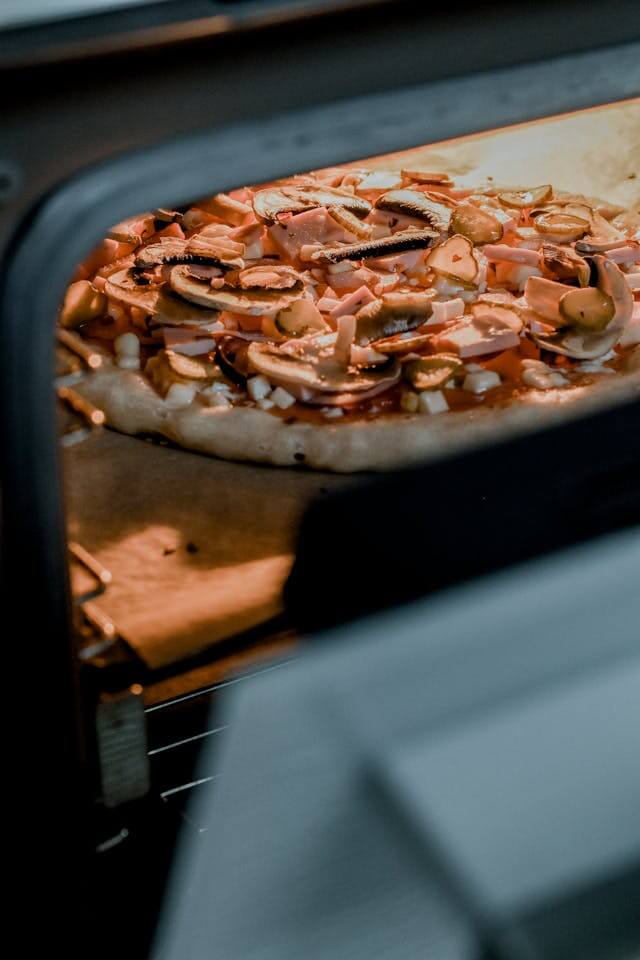
Different baking materials don’t heat up or retain heat the same way in a standard home oven. Even your oven temperature display cannot show the actual temperature accurately.
Pizza stone absorbs heat slowly
Pizza stones have high thermal mass, but you need to preheat them for about an hour to retain their temperature. A pizza stone heats slowly, and if you don’t preheat long enough, it won’t perform consistently.
Thin baking sheets lose heat quickly
Thin baking sheets do not retain heat well enough because of their lower thermal mass but they do heat up very fast.
While most people use aluminium in their home kitchen because it has high thermal conductivity, is lightweight, heats up quickly, and is quite affordable. And of course, it is really good for baking cookies and roasting, but not so good for pizza baking.
Why your baking surface loses heat too quickly
Have you ever noticed, while baking, that when you place your pizza on the hot surface of your oven, the surface loses heat very quickly, even though your oven is fully heated?
Pizza baking is all about the heat transfer that connects from the surface to the dough. When the dough touches the surface, it instantly absorbs heat, and if the baking surface cannot maintain that steady heat, it becomes weaker and slows down the entire baking process.
The top of your pizza might cook well because it depends on the oven’s hot air, but the bottom relies entirely on direct contact with the baking surface. So even a fraction of a drop in temperature can severely affect your bottom browning.
And if the baking surface can’t hold that heat consistently, you will likely find your crust soft or even undercooked, even at high oven temperatures.
Signs to look out for that your regular oven is not hot enough for pizza baking
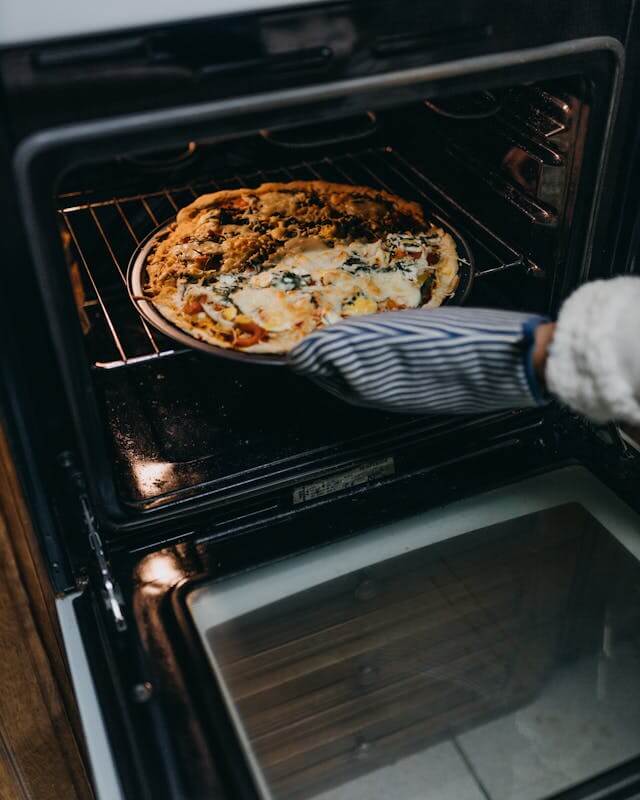
There are clear signs that your oven is not getting hot enough during baking. Here are some common things to look out for.
- Pale crust even after full bake: Your pizza crust looks pale or under-browned, likely because the baking temperature was too low.
- The pizza crust feels soft and doughy, not crispy: To get a crispy crust, the pizza needs to cook as quickly as possible, and if the dough doesn’t get that strong heat, your pizza will come out soft and undercooked.
- Cheese cooked, but the bottom is still doughy: Sometimes you will feel like the toppings are cooking faster than the base.
- Long baking time needed: Improper heating can also lead to longer baking time. You keep waiting for it to brown, but the crust color of the pizza still comes out pale.
- Lack of oven spring in the crust: The dough needs to puff up immediately as it hits the surface to achieve that light, airy, and crispy crust we all desire.
How to Get Better Pizza Results from a Home Oven
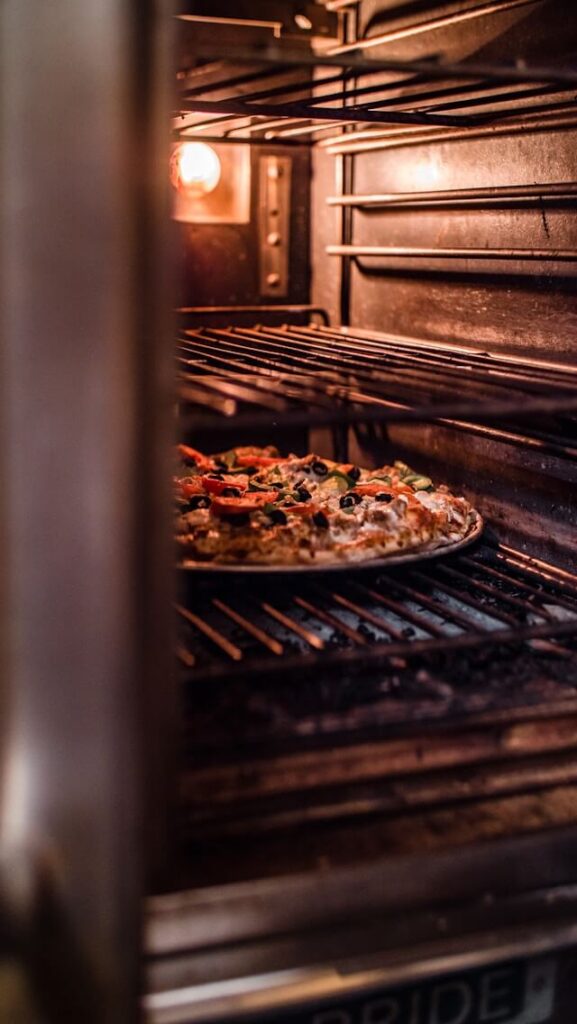
Many home ovens struggle to reach the high temperatures needed for baking pizzas, and even when you set it to its maximum, the results are often terrible. You must understand that you can’t just magically force your oven beyond its limits.
But there is some good news. Baking a perfect pizza isn’t all about temperature. What really matters is how your oven distributes heat. But you can still get a good outcome with a few adjustments.
Use the broiler to boost top heat
Some regular ovens tend to get more heat from the baking surface than from the top. As a result, your crust cooks very quickly, but the cheese doesn’t brown well, and the toppings stay undercooked.
You can still get things right by switching from bake to broil mode. The boiler or grill mode provides direct heat from the top, helping your cheese melt faster and giving your pizza a nice char. Just let it cook for around a minute or two. But you need to be careful here: the broiler gives intense heat, so keep a close watch, or your toppings might burn.
Use a thicker baking surface for a strong bottom heat
Another way to improve your baking results is by using a thicker baking surface. Instead of using a thin baking surface, use a thicker pizza stone or steel, as they retain heat and distribute it more evenly. So when your dough hits the oven floor, it will help to cook faster and get an evenly baked pizza. But make sure to preheat the pizza stone for at least an hour before baking.
Change your baking method
While you cannot increase the oven temperature, you can still adjust your baking technique a bit to achieve a good outcome.
Even if the baking surface is still weak for a proper bake, you can always pre-bake the base. Here is something I have tried earlier in my old oven.
- Place just the dough in the oven.
- Bake it for a few minutes (Without toppings).
- Take it out.
- Then add the cheese, sauce, and the ingredients.
- Put it back in.
Remember, this method works when your oven temperature is low or when you are having problems with a softer crust.
Choose the Right Pizza Style for Your Oven
In some cases, no matter how many adjustments you make, some older or budget ovens still don’t work well with certain pizza styles. If you are trying to make a traditional Neapolitan pizza, then you will likely need your oven temp to be extremely hot. But home ovens can’t go that deep for this kind of thin crust pizza style.
So if you want to get improved results, go with a different pizza styles like a New York-style or a pan pizza. You will get much better delicious pizza since they suit lower oven temperatures.
Best Oven Setup for Better Pizza at Home
Here are some simple steps you can follow to maximize your pizza-baking results in your home oven.
- Use the middle or lower rack to get the dough super crispy and golden brown.
- Preheat a pizza steel or a thick stone that retains your oven’s heat and releases it to the pizza for better crust cooking.
- Set your oven to the maximum temperature, around 450–500°F, or maybe higher if possible.
- Remove any excess items from the oven so the heat can circulate properly.
- Preheat your oven for 45–60 minutes to make sure everything inside gets hot, not just the air.
So yes, these are the few steps I follow when I use my regular home oven to make a homemade pizza.
