
Why Overloading Pizza Toppings Ruins Your Homemade Pizza And How to Fix It?

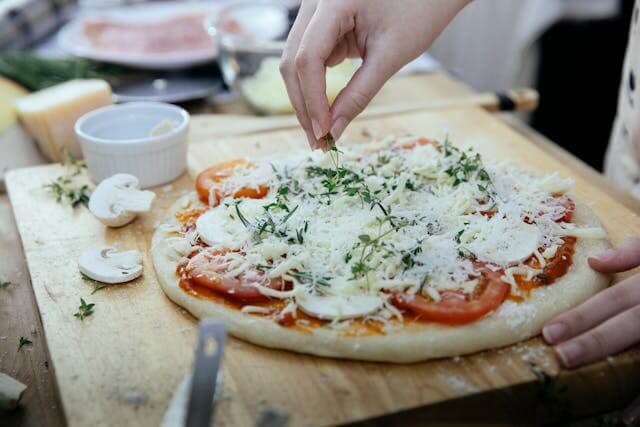
When I first started baking pizzas at home, I kept ruining it—and I didn’t even realize why. Not because I didn’t get the dough recipe right or preheat the pizza oven long enough; it was because of the toppings I used. It is such a common baking mistake that people ignore completely.
I used to think that the more the better. If the popular pizza chains can pile on the toppings, why not I and more toppings mean more flavor, right?
And believe me, the pizza looked simply amazing before baking. But the outcome was entirely unexpected. The pizza came out completely undercooked with a soggy mess.
After so many failed attempts, I began to realize that a great pizza is not all about quantity. It’s about finding the right balance. I have seen most home bakers blame their oven, cheese or dough preparation, but they very rarely blame the toppings on a pizza.
Most people don’t realize that toppings aren’t all about taste and flavor; it’s about how your pizza cooks.
In this article, I will cover everything in detail, like how many toppings are generally safe, how to balance them properly, and how to fix them. So let’s get on with it.
What Happens When You Add Too Many Toppings?
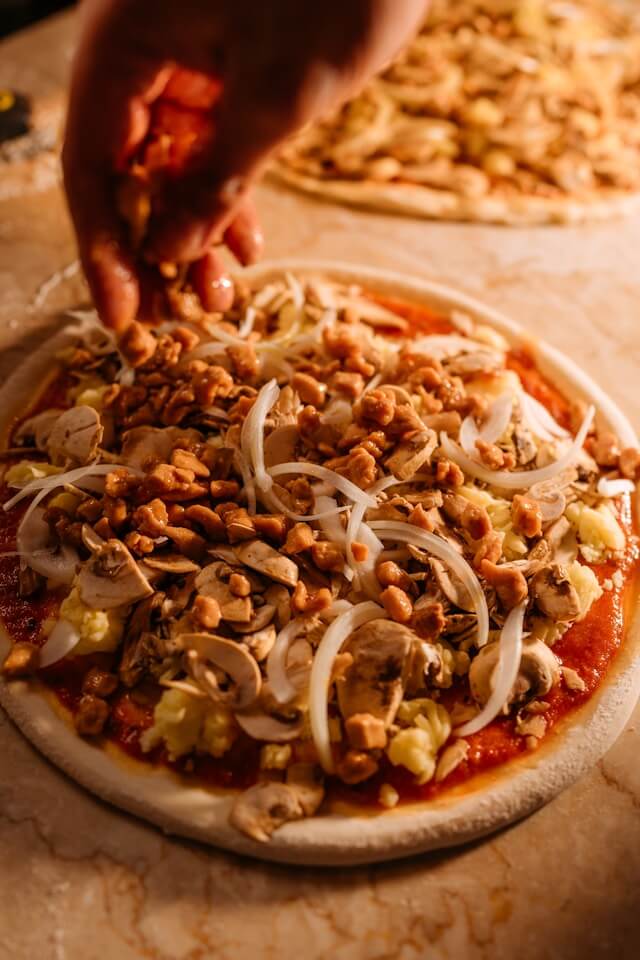
Adding way too many toppings not only affects how the toppings cook but also ruins your overall effort. So these are the common issues you will notice.
- Soggy crust: This is the common problem you will notice. The bottom will come out soft and a bit wet, rather than getting a crispy base.
- Uneven cooking: You will also notice that some toppings are cooked through, while others remain raw or underbaked.
- Toppings falling off: You might feel that everything looks good here. But the reality is, when you try to grab a slice, the toppings start to slide off, making it really messy to eat.
- Flavor imbalance: When you pile on so many toppings, you won’t get a balanced taste. The pizza’s flavor will be all over the place, with some flavors standing out too much.
Why Overloading Toppings Ruins Your Pizza (The Real Reason Behind it)
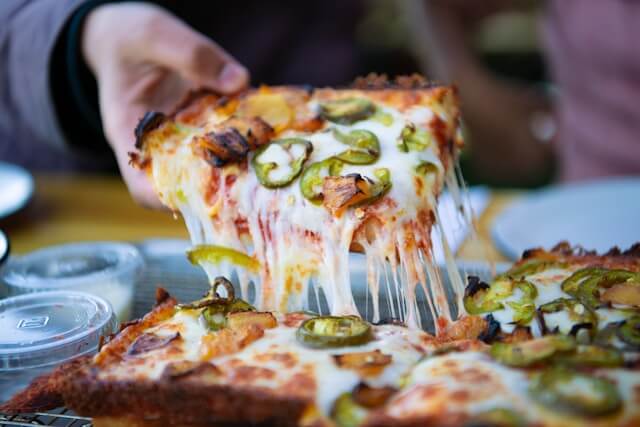
The problem is not really about the dough preparation or the oven not working well; it is about overloading with toppings. Here are some factors:
Toppings release moisture
When you bake your homemade pizza in the oven, the heat tends to release water from the pizza, and that excess moisture stays on top of the cheese and dough. And if the surface stays wet, the pizza won’t get crispy, right?
As a result, your baking time slows down. So your pizza needs more time to bake and dry out that excess moisture, but even then, it won’t come out crispy as you expected.
They block heat from reaching the dough
Have you ever realized that when you pile on too many toppings, it becomes really hard for the heat to reach the pizza dough? It is like a barrier on top that blocks the heat from getting through properly.
To bake a pizza properly, the heat needs to reach the base so that it can cook through and get that perfectly crispy bottom rather than getting soft and soggy.
Extra weight affects structure
Adding too many ingredients makes your pizza very heavy, so it doesn’t hold its shape. The base often struggles to carry so much weight while it is still baking, and the pizza doesn’t get stable.
As a result, you will feel the slice bends too much when you pick it up, and the toppings start to fall off. So keep in mind that the more toppings you add, the more pressure builds on the base, making it even harder to hold its shape.
How Much Topping Is Too Much?
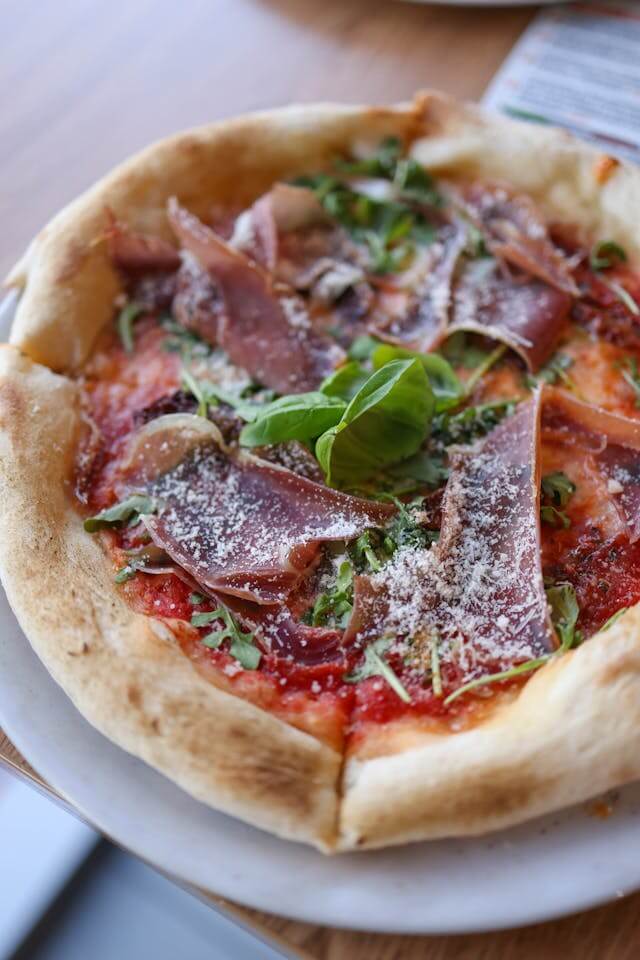
Now that we have covered how too many toppings affect your pizza, you still need to realize how much is too much. Here are some simple rules to keep your toppings balanced.
Do you still see the cheese?
After preparing the dough, the common order is to apply the right sauce and cheese, then add the ingredients, right? So when you are adding the toppings, you must make sure the toppings are not completely covering the cheese.
If you can’t see the cheese, then it is a sign that you have added too much.
Keep toppings in a single and even layer
When applying the ingredients to the dough, don’t just pile everything in one area. It makes the pizza balance uneven. So spread the toppings evenly so that they feel equal.
Don’t just overload some areas and keep the rest empty. And try to keep it as simple as you can. Make sure each slice gets a fair amount when you cut, so the pizza feels balanced.
Avoid stacking or piling toppings
Another simple rule is not to keep adding layers on top of each other. When you do this, some parts become thicker while others stay thin. Think of it like this: the more you stack, the more weight you add.
So if the dough gets heavier, it will come out soft and undercooked after baking. And after baking, it will be even harder to handle the pizza as you won’t be able to cut the slices neatly.
Balancing the sauce, cheese, and toppings
A good homemade pizza is not all about the toppings. It is how you keep everything in equal proportion, like the sauce, cheese and the toppings. Everything should work in order, and each has its own role.
A sauce is meant to add the base flavor, cheese adds that creamy texture and the toppings have its own taste. So when an ingredient is more than the other, the pizza starts to feel off.
So adding the right amount is key, so it feels consistent, and you can enjoy the pizza overall.
The 4 Types of Pizza Toppings And How They Affect Baking?
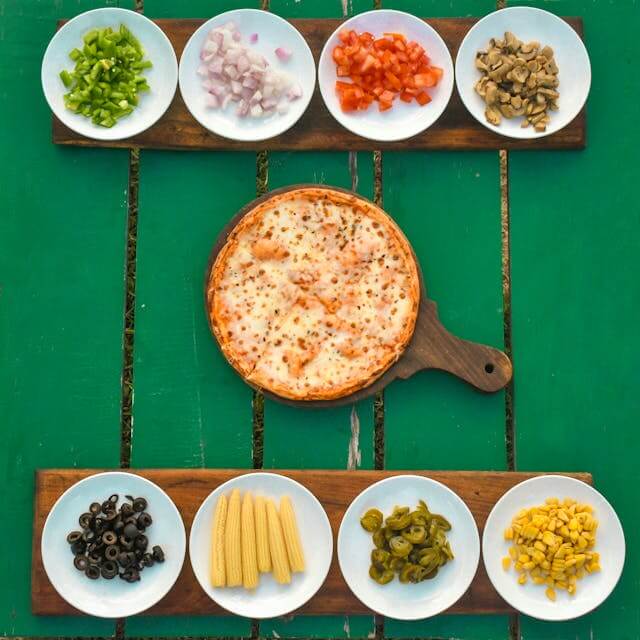
Now that we have covered why overloading toppings is a bad idea. But do you know that not all pizza toppings bake the same way in the oven? Each ingredient has its own role, and they don’t react the same way to the heat.
Some of them release extra moisture, while others are too heavy and need to be handled carefully. So let’s understand them one by one.
High-moisture toppings (e.g., mushrooms, onions, tomatoes)
High-moisture toppings like mushrooms, onions and tomatoes contain a lot of water. You might have noticed that when we cook any one of these ingredients, how much water they release?
So naturally, the same thing happens to the pizza toppings—they release that extra moisture while baking and add the extra water on top of the pizza. And that extra water makes it very hard for the top layer to dry out properly, which affects the overall bake.
High-fat toppings (e.g., cheese, pepperoni)
We all love using cheese and pepperoni, right? But do you know that these high-fat toppings contain a lot of natural oils? When we bake the pizza, the fat melts and turns into oil, and this oil doesn’t just stay in one area; it spreads across the cheese and other toppings.
So the pizza’s taste gets richer, but if there’s too much of it, the oil will build up, and the pizza will feel greasy and heavier to eat.
Dense toppings (e.g., chicken, sausage, paneer)
Chicken, sausages and paneer are dense toppings, and they are heavy and thicker than other toppings. And because of this, it needs more time to cook.
You might think the outside is already cooked, but the inside isn’t fully cooked yet. These toppings also affect the other toppings, as they might cook faster, while others may need more time.
So if you cook them properly and evenly, the texture will be off, and when you try to eat them, they will be a bit hard or chewy.
Delicate toppings (e.g., basil, leafy greens)
Delicate vegetable toppings like basil or leafy greens are very light and soft. So they don’t take much time and tend to cook very quickly in the oven. But if they are exposed to the heat long enough, they can easily lose their texture, and you will lose that fresh taste.
The Most Common Topping Mistakes
Most people think that using too many toppings ruins a good pizza. Still, many overlook small mistakes, like how you add them, which can also affect how your pizza bakes.
- Mixing fast- and slow-cooking toppings— Mixing different types of toppings on the pizza — is one of the common mistakes that bakers make without even thinking about how they cook in the oven. Some cooks really fast, while others are slow, and when they are used together, it leads to inconsistent baking.
- Wrong topping order (what goes under/over cheese)— A correct topping order is very important for a pizza to bake evenly. Home bakers should understand what goes over and under the cheese. So a wrong topping order may not cook properly or may not even come out the way you expected.
- Using cold toppings straight from the fridge— Another common mistake is using cold toppings from the fridge. These ingredients are already cold but not as cold as your other toppings, so they naturally need longer to heat up in the oven. While the other part of the pizza may cook quickly, it still needs time, resulting in uneven baking.
- Cutting toppings too large— Large-sized toppings take longer to cook because of their thickness and size. Bigger pieces make it very hard to place on top of the pizza, and it is even more difficult to spread them properly. As a result, some slices may get too much topping, while others have almost none. It makes the pizza harder to handle and makes it almost impossible to eat properly.
How to Apply the Right Topping Balance
Now that we have covered all the key common mistakes, we will cover how to do it the right way. You see, balance is everything. Even a small change in how you use the toppings can improve your overall baking results.
Why “less is more” actually works?
You will often find that using fewer toppings yields better baking results. In my case, 2-3 toppings are usually enough to make my pizza feel more balanced.
The reason is straightforward: when you keep it simple, each topping gets enough space to cook properly rather than fighting among themselves. The taste and flavor also matter here. You will find the flavor of each one clearly. It makes the pizza even more fun to eat.
Don’t overcrowd the center.
When it is time to apply the toppings, don’t just put everything in the center of the pizza. Instead of putting it in one spot, spread it evenly across the surface. Just try to picture it like this: how many slices will there be in your pizza, and then distribute each slice to get balanced toppings.
Choose toppings that work well together.
When we think of baking a homemade pizza, we always wonder which toppings we can use. Choosing random ingredients out of nowhere can lose its flavor, and sometimes even certain toppings can also prevent the pizza crust from getting crispy properly.
So it is better to use ingredients that complement each other and enhance the overall taste of your pizza. Here are some topping examples I like to use for my homemade pizza.
- Mushrooms + onions + cheese (simple and balanced)
- Tomato + basil + cheese (fresh and classic)
- Chicken + bell peppers + onions (slight texture mix)
- Pepperoni + cheese (rich and strong flavor)
When to Precook Toppings (Critical for Moisture Control)
Some ingredients need to be cooked before you use them in the pizza toppings. This way, you can cook better and get better results. But not all toppings need to be cooked before adding them to the pizza.
When and why to precook? (mushrooms, onions, and raw meats)
You need to precook some toppings like mushrooms, onions and raw meats before adding them to your pizza. These things contain a lot of water, and if you put them in raw, your pizza will get soggy and take a very long time to cook.
For example, with mushrooms, it is best to precook them for about 7 minutes until they release excess moisture, but this also depends on the size and heat.
When NOT to precook? (delicate toppings, cured meats)
There are also toppings you don’t need to cook; place them raw on the pizza. Ingredients like basil, leafy veggies and cured meats like pepperoni or salami don’t need to be precooked before using. So it is better to add them directly to the pizza.
Do Pizza Types Affect How Many Toppings You Can Add?
You might have noticed that not all pizzas need the same amount of toppings. A type of pizza also matters. Some types of pizza are suitable for lighter toppings, while others can handle heavier ones. Understanding these common mistakes can help you achieve better baking results.
Thin-crust pizzas (Neapolitan-style)
Thin-crust pizzas, like Neapolitan pizzas, are very delicate and fragile, and they cook very quickly in the oven at its highest temperature. Because they’re thin, these pizzas can’t handle too many toppings.
It is better to use lighter toppings, so they can bake properly and achieve a crispy, crunchy texture. As for me, I always like the classic way. A combination of tomato sauce, fresh mozzarella, and basil leaves works best for me.
Thick crust/pan pizzas (Detroit-style)
On the other hand, thicker crusts like Detroit-style pizzas can handle heavier toppings than thin crusts. But it takes a long time to bake so that all the ingredients can get enough time to cook properly. You can use stuff like meats, vegetables and extra cheese, but don’t overload it.
How to Fix an Overloaded Pizza
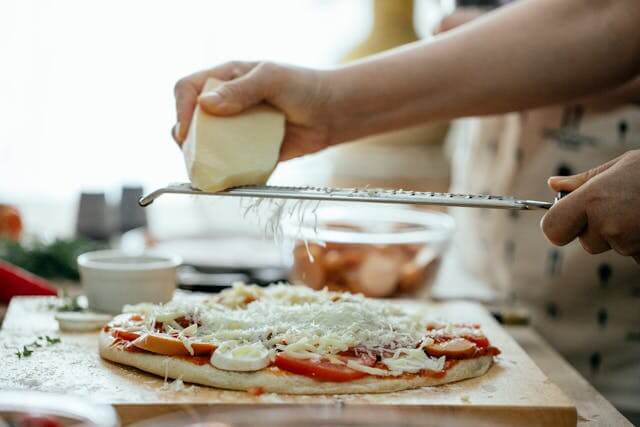
When we prepare the ingredients, we add them all to the pizza without even realizing it is way too much. Does it mean that all the hardworking efforts are going in vain? Perhaps not. You don’t need to start over again. A few adjustments can still fix your baking performance.
Remove excess moisture (paper towel trick, precooking)
Sometimes the ingredients may look wet when you place them on your pizza, but you can still remove excess water before baking. Just wipe the surface gently with a paper towel or any tissue and make sure it’s clean and dry. This way, it will absorb that extra moisture.
Other than this, the best way to fix this is to precook certain toppings, like mushrooms and onions, so that they can release all their water.
However, note that some additional moisture will still be released during baking if you use raw ingredients. It is better to cut them into thin slices before adding them to the pizza, and if needed, you can still try baking a little longer so the water can dry out slightly. It might help.
Reduce toppings to balance the flavor.
Another way to fix an overloaded topping is to balance the ingredients. You don’t need to remove all the toppings; try to use a small portion of each.
It is better to use no more than 3-4 main ingredients besides the sauce and cheese. Focusing on quality more than quantity. A good pizza is all about balancing the flavor, texture and overall color.
Adjust the baking time and temperature.
If your toppings are overloaded, you can still improve the result by adjusting the temperature and time. Well, it depends on what kind of pizza you’re making.
Still, you can manage it by lowering the temperature a bit and increasing the baking time so the ingredients can get enough time to cook properly.
It also helps to dry out the excess moisture if you are using watery ingredients. And most importantly, keep an eye on the crust and the bottom of the pizza. If the heat is too high, it might burn.
Quick Checklist Before You Bake
Before baking pizza in your home oven, here are some quick checks to make sure you haven’t overloaded your toppings.
- Are the toppings too heavy or seem overloaded?
- Are you using more than 2–3 main toppings?
- Are any of your toppings too wet? (mushrooms, onions, tomatoes)
- Did you precook high-moisture ingredients?
- Can you still see some cheese under the toppings?
- Are toppings evenly spread across the pizza?
- Are you avoiding piling toppings in one area?
- Are you keeping the sauce layer thin (not overloaded)?
- Does your pizza still look balanced (not heavy or crowded)?
Frequently Asked Questions (FAQS)
Which toppings should go on top or under the cheese?
It depends on the toppings. Mostly, toppings go on top of the cheese. However, if you have sliced mushrooms or precooked chicken, then placing them under the cheese is the best option. For pepperoni, it is better to place them at the top so they get crispy.
Does adding more cheese count as overloading?
Yes. Adding too much cheese can trap moisture and block airflow, often leading to a soggy crust.
Why do my toppings burn before the crust cooks?
The common reason might be cooking at high temperatures for a long time, or the toppings may be small and thinly sliced, so they cook much faster than the crust.
Which toppings are least likely to make a pizza crust soggy?
Low moisture toppings are the best way to go. Toppings like pepperoni, cooked sausage, olives and veggies like bell peppers and Jalapeños work better because they don’t release much water while cooking.
Should I cook the veggies before putting them on the pizza?
It depends mostly on the type of vegetables you are using. Veggies like onions, mushrooms and spinach are high-moisture, and it is recommended always to precook them to remove excess moisture and prevent a soggy crust. However, some veggies, such as bell peppers or olives, can be added raw.
