
How Pizza Stone Thickness Affects Heat Retention?

Are you trying to make perfect pizza at home with your best pizza ovens, but your pizzas still don’t come out the way you expected? You did everything right, like heating the oven properly, using good ingredients, but still the crust doesn’t look good, and it is not even crispier like it should be. In fact, most home bakers don’t realize and make these common pizza-making mistakes when baking a pizza at home.
I have tried and tested several pizza ovens over the years, and there is one important thing I have learned: a good pizza stone can make a big difference. I have seen that in many cases, the problem doesn’t lie only in the pizza oven or the recipe. It is about how the pizza stone holds the heat.
The thickness of a pizza stone plays a major role in how the bottom of your pizzas bakes. In this guide, I will explain what happens when you use thin or thicker stones, and how they behave when you cook a pizza at home with a portable pizza oven at high heat.
What is Heat Retention, and does it matter when baking pizzas?
Heat retention is how well the pizza stone holds heat once it gets hot. You must have noticed that when you place the pizza on the stone, it immediately transfers heat to your dough.
I have seen many pizza stones that don’t hold heat well enough; as soon as you put the pizza on the stone, it cools down instantly. Because of this issue, the bottom of your pizzas doesn’t get enough heat to cook properly.
Most people assume the pizza oven causes an undercooked crust, but the actual truth is the pizza stone. If a pizza stone cannot retain heat properly, you will get terrible pizzas every time you cook, even at the highest oven temperature.
You may have noticed that when you bake the first pizza, it comes out just great. But when you are trying to bake the second one, the bottom of your pizza comes out soft and pale. It happens because the stone has already lost its heat and can’t recover quickly. Now, if the stone is good enough, like if it can hold the heat well, then it will stay hot consistently, and then you will cook several pizzas at a time.
So, good heat retention doesn’t mean the pizza stone has to be extremely hot; it simply means it can stay stable for a longer time while you are baking.
Why a Thick Pizza Stone Store More Heat?
Thicker pizza stones are usually around 1 inch thick. From my experience, a thicker pizza stone can retain more heat due to its higher thermal mass. During preheating, you will notice it takes a bit of time to heat up and can retain heat, but once it gets hot enough, it doesn’t cool down quickly when you place your pizzas on the oven surface.
There is one sure thing about using a thicker stone, I have learned over the years: you will definitely get consistent crust results. It is because when the stone gets hot, the bottom of your pizzas starts baking instantly.
How Does Stone Thickness Affect Preheating Time and Baking Stability?
I have tested and used several pizza stones, and over time, I had to replace a few because of cracking caused by low-quality materials or high baking temperatures.
After going through this, I have realized that stone thickness plays a crucial role in baking. Thinner pizza stones are usually 0.4–0.6 inches thick and much lighter. So they are very easy to move and also heat up pretty quickly. But the downside is that they lose heat quickly after the first bake and aren’t consistent enough to bake multiple pizzas at once.
On the other hand, thicker stones are generally around 1 inch thicker and also heavier. Well, it does take a bit of time to heat up, but once it does, the heat stays stable and recovers well between baking multiple pizzas in a row. If you are curious about how pizza stones compare with other baking surfaces, this guide explains the differences in detail on how they affect the crust texture when baking pizza in your home oven.
How do different types of Stone Material Affect Heat?
Not all pizza stones are the same, even if they have the same thickness. The materials that the stone is made from matter too. Different stone materials don’t behave the same way, such as how quickly they heat up, how stable they are, and how quickly they recover between bakes. I have used some types of pizza stones that worked for me over the years.
To make things easier for you to understand, I’ve put together a comparison table showing how different pizza stone materials typically behave.
Pizza stone materials and their typical thickness and usage
|
Material Type |
Typical Thickness Range (inches) |
Weight |
Heat Recovery Between Pizzas |
Crack Risk |
Best Oven Type |
Best For |
|
Ceramic Stone |
0.4 – 0.6 |
Light–Medium |
Slow |
High |
Home ovens |
Occasional pizza baking |
|
Cordierite Stone |
0.6 – 0.75 |
Medium–Heavy |
Moderate |
Very Low |
Home, grill, outdoor ovens |
Most home cooks |
|
Biscotto Stone |
0.8 – 1.2 |
Heavy |
Moderate |
Low |
Very hot pizza ovens |
Neapolitan pizza |
|
Pizza Steel |
0.25 – 0.38 |
Very Heavy |
Very Fast |
None |
Home ovens |
Back-to-back pizzas |
|
Cast Iron |
0.4 – 0.75 |
Very Heavy |
Fast |
None |
Grill & oven |
Deep crust & searing |
Cordierite Stones
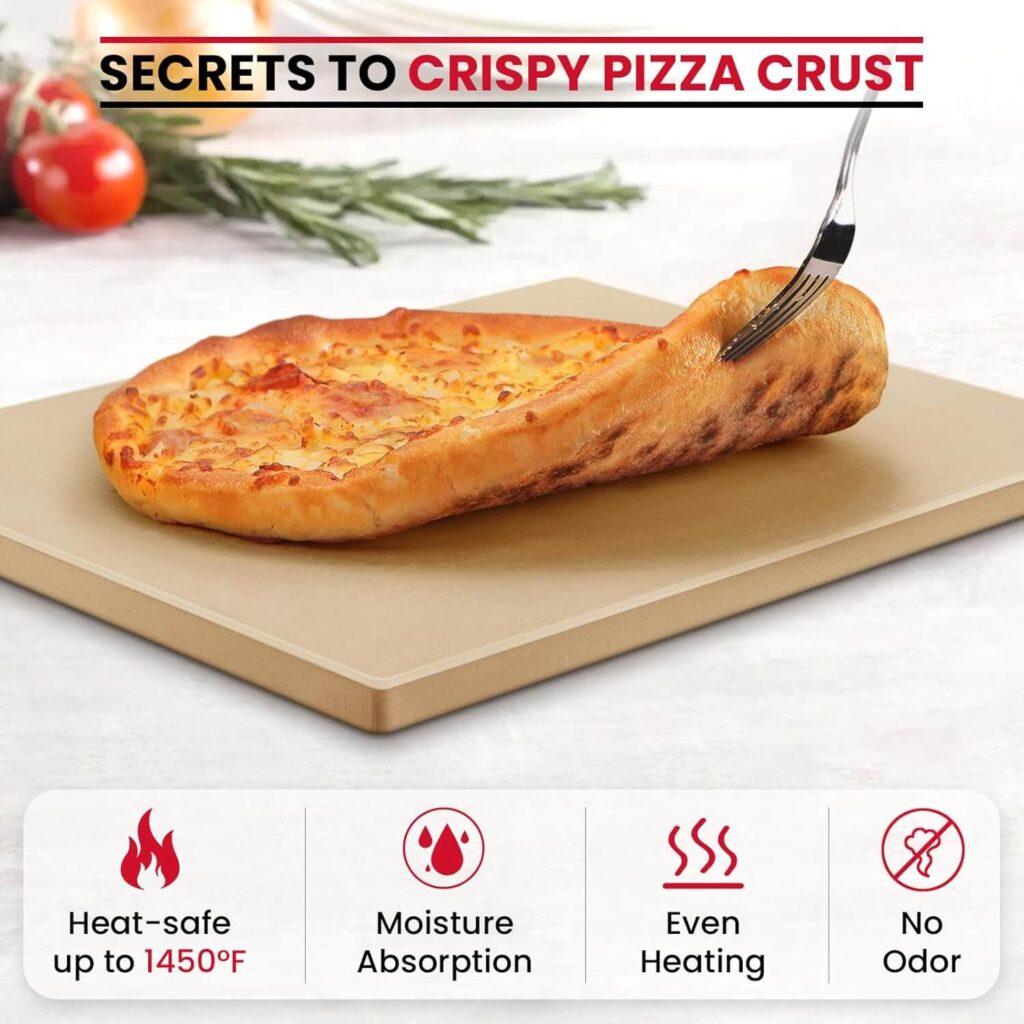
Cordierite Stones are the clear winner and one of my favorite pizza stones for pizza baking. It has been specifically engineered to handle extremely high temperatures up to around 1400°F (760°C) without cracking or damaging the stone.
Cordierite stones are usually 0.6 to 1 inch thick and 14 to 16 inches wide, making them easy to fit in home ovens, grills, and portable pizza ovens. One of the best features of this pizza stone, which I’ve liked over the years, is its excellent heat retention. Once the stone heats up, it stays more consistent and holds heat very well, baking your pizzas evenly.
This pizza stone is highly durable thanks to its built-in thermal shock resistance. If you use it regularly, it will not crack easily, even when heated and cooled repeatedly.
The Cordierite stones are multi-functional, so that you can bake not just pizzas but also a variety of other dishes like breads, roasted vegetables, chicken legs, and more. These stones are also very easy to maintain compared to other cheap stones, as they don’t rust or bend.
Biscotto (Clay) Stones
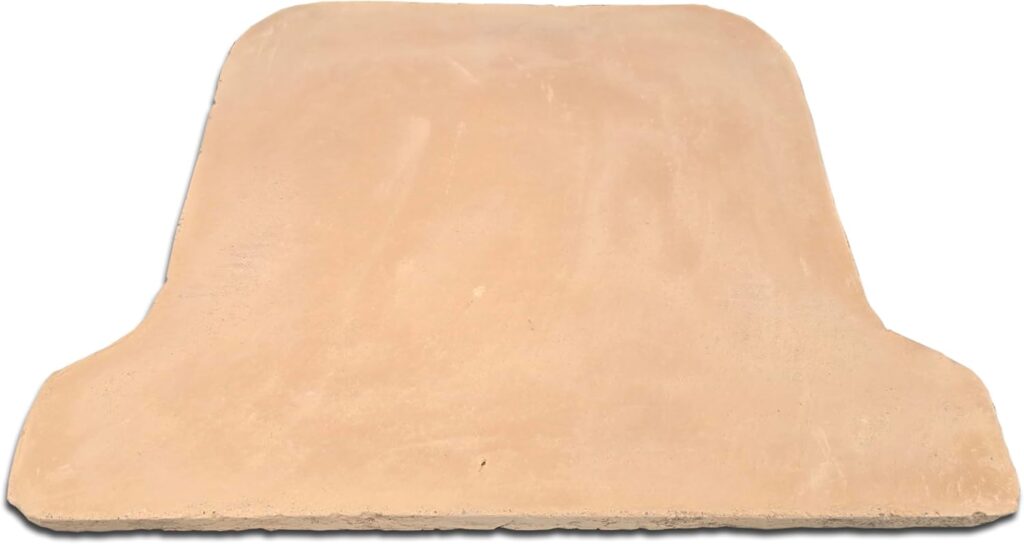
Biscotto Stones are the traditional, fragile pizza baking stones, and are made from natural clay (Volcanic), which allows you to bake at very high temperatures. I usually use the Biscotto stones in my wood-fired ovens, which can reach 800–950°F.
It is because at this temperature, these pizza stones perform best and can bake a pizza in just 90 seconds. The biggest benefit of using the Biscotto stones is that they heat slowly and gently at high temperatures, preventing the bottom of the pizzas from burning.
Now, this is super incredible for baking a perfect Neapolitan-style pizza. Biscotto stones are usually thicker, almost double the thickness of the regular stones, and are often around 1 to 1.5 inches. They are also quite heavy and retain heat slowly, so when the oven gets very hot, the stone transfers heat more slowly to the pizza dough.
However, the Biscotto stones have a porous design and are more fragile than cordierite, but that doesn’t mean they crack easily. But these stones have to be handled with care. If you heat it too quickly, cool it down too quickly, or even expose it to moisture, it can damage them.
Ceramic stones
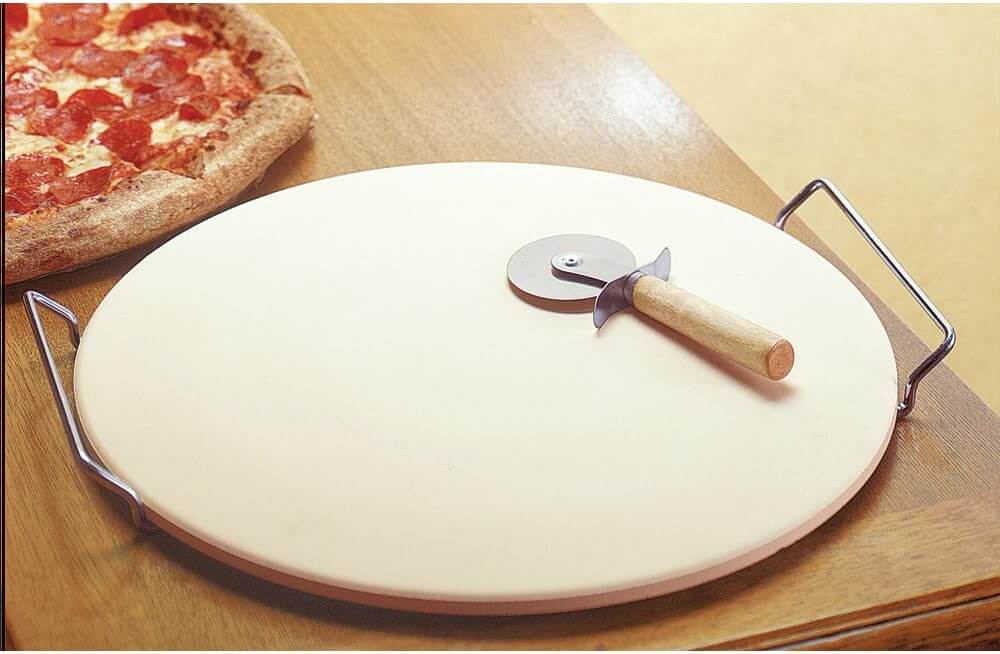
Ceramic stones are usually made from ceramic clay materials and are mainly found in budget pizza ovens. I have used these stones, and they work quite well at moderate temperatures, but they do not hold heat as well as cordierite or biscotto stones.
These stones heat up quickly but lose heat after baking the first pizza. If you are planning to bake back-to-back pizzas, it isn’t a good idea, and you will find that your pizzas turn soft and soggy.
If you are a beginner and not a regular cook, I recommend using ceramic stones, as they are cheaper and widely available. They are also very light in weight and easy to move.
If you are an occasional cook and cook at a few pizza parties, these ceramic stones can also last a long time if you heat them slowly and keep them dry.
Yes, they get damaged quite easily due to high heat and sudden temperature changes, but if you are serious about baking pizzas regularly, I recommend upgrading later.
Pizza steel vs Pizza stones vs Cast Iron
Pizza steel is a baking surface made entirely of thick, flat steel plates. The main benefit is that they heat up quickly and distribute heat to the pizza dough faster than other pizza stones.
But you have to monitor your pizzas very carefully, like rotating them in time, otherwise the pizza steel might burn the bottom of your pizzas. One great thing about the pizza steel is that it retains the heat really well, like very consistently between baking, and is perfect for baking multiple pizzas at a time.
I have used pizza steels, which are around 0.25 to 0.5 inches thick, mostly for my home ovens.
Furthermore, pizza steels are much more durable than pizza stones, as they are pure metal and can withstand extreme temperatures. But there is one thing to watch out for: it can rust if you don’t dry it properly after cleaning.
Pizza steel doesn’t absorb moisture. It means it doesn’t soak up any water from the dough, as pizza stones do, so you might find the crust of your pizzas very crispy.
As for cast iron, it tends to heat up slowly but retains heat well, staying hot for a longer period. You can even cook multiple pizzas in a row without any temperature fluctuations. Though you will be able to get those crispy bottom crusts as you get in steel, it will be a slower bake.
One advantage of using cast iron is its durability. It is very strong and doesn’t crack easily like ceramic or clay stones, even when heated to its maximum temperature.
However, it is relatively easy to clean and maintain; dry it off completely after cleaning so it won’t rust over time.
Moreover, cast iron is a very versatile option, and you can even cook other foods besides pizza, like bake bread, chicken thighs, steaks, roasted vegetables, and more.
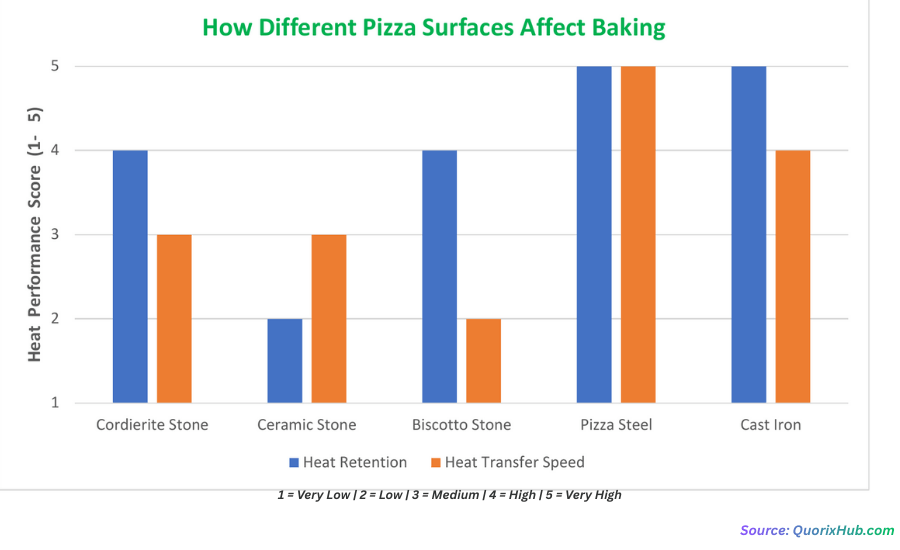
You see, I’m just a home baker, and I have put together a chart below so that you can get a clear understanding of the heat retention and transfer scores of each material, and these are based on my own experience baking pizzas.
Final Thoughts
So yeah. That’s it. At the end of the day, it gave me a clear understanding that good heat retention is what matters most when it comes to baking a proper crust pizza.
A thicker baking surface tends to hold more heat and release it slowly, which helps the pizzas cook properly. I have used all three pizza stones, like the cordierite, ceramic, and biscotto, and they work really well.
So there is no single best here. Every pizza oven, whether home, outdoor, or wood-fired, works differently, so it really depends on how hot the oven gets and the style of pizzas you are trying to make.
Thick cordierite is the best option for most people and is reliable. Ceramics are budget-friendly, but you need to handle them with care. In contrast, biscotto stones are best for very hot ovens, as they heat up slowly, making them ideal for authentic Neapolitan-style pizza. Pizza steels and cast iron also work very differently.
So, choosing the right pizza stone that matches your oven and is thick enough will ensure your pizzas bake evenly without burning, and you will always get the best results.
Enjoy baking pizzas!
Frequently Asked Questions (FAQS)
Does the thickness of a pizza stone matter?
Yes, a thick pizza stone can retain more heat and don’t cool down quickly, helping the crusts of pizzas bake more evenly.
Is a thicker pizza stone better?
Yes, thicker pizza stones are always better than thin stones. A thicker pizza stone holds heat better, even as the temperature drops, reducing the risk of an undercooked crust.
Does a pizza stone retain heat?
Yes, pizza stones retain heat, and once they are fully heated, they deliver steady heat to the dough, helping the crust bake evenly.
Do you oil a pizza stone before using it?
Never use oil on a pizza stone, as it can soak into the stone and damage it. To prevent sticking, you can use flour instead of oil.
Can a pizza stone be used as a heat deflector?
Yes, a pizza stone can work as a heat deflector because it absorbs direct heat and releases it evenly, making your baking more consistent.
What happens if I don’t preheat a pizza stone?
You need to preheat the pizza stone; if it’s not hot enough, your pizza crust will come out soft and undercooked.
Can a pizza stone get too hot?
Yes, if a pizza stone gets too hot and stays that way for a long time, it can crack or even be damaged.
