
How Long to Preheat Your Oven for Homemade Pizza Baking

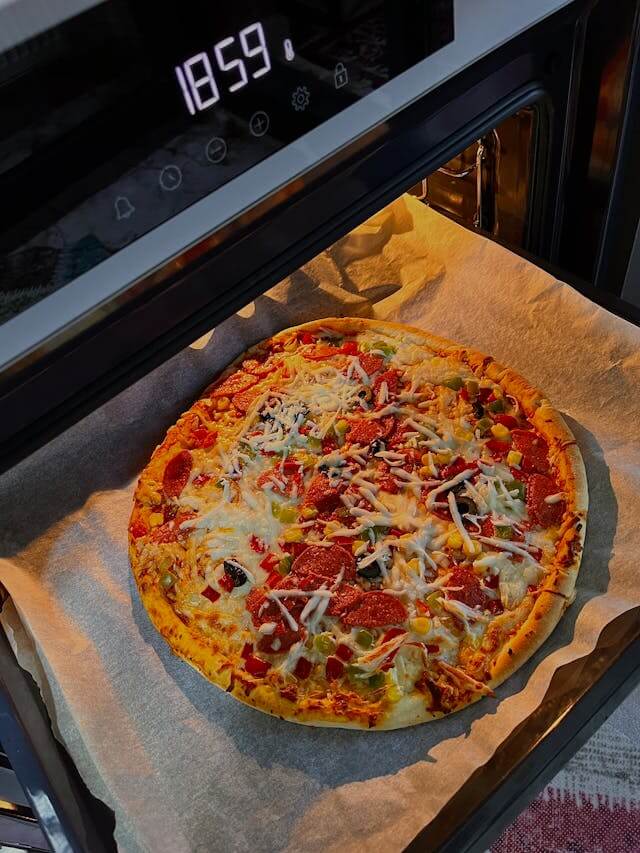
Pizzas are one of the most delicious foods in the world, and making a perfect homemade pie isn’t always easy. But have you ever thought that you have done everything right, from making the perfect dough, evenly spreading toppings, but still the outcome didn’t come out the way you expected?
Everyone loves a perfectly crispy crust, not a soft and undercooked pie. The common issue is quite simple, but most people often ignore it. In fact, a common issue like a poor toppings overload doesn’t just ruin your pizza but also your overall baking performance.
You must have noticed that when your oven beeps, you think it’s ready for a bake, but for pizza baking, that temperature isn’t high enough.
In this guide, you will learn how long to properly preheat your oven, when it is ready, and how to avoid common pizza-baking mistakes. So let’s get on with it.
Why Preheating Matters More for Pizza than Other Foods?
Pizzas bake very differently from other foods like bread and cakes. In simple words, pizza baking needs instant heat right from the start. Pizza dough is usually very thin and cooks in just 1-10 minutes, depending on the type of oven.
On the other hand, breads are much thicker and take much longer to bake; the usual baking time is 25–60 minutes.
Think of it like frying an egg in a pan: it requires instant heat, just as pizza does. Cooking rice on a low flame requires gradual cooking over time, just like bread.
So the bottom of the pie needs to start cooking right away, or the pizza will come out soft instead of that crispy crust.
How long does preheating actually take for a crispy homemade pizza?
Most home ovens take around 20-30 minutes to preheat for baking a pizza. But if you are using a pizza stone or steel, you will need at least 45-60 minutes.
Home ovens don’t just need time to reach the desired temperature; the interior and surfaces also need to heat up properly for a pizza to cook properly.
However, not all ovens work the same way. It also depends on size, age, and the overall performance. In high-quality ovens, such as outdoor pizza ovens, preheating time matters, and they work very differently from home ovens.
If you are not sure how long to preheat your oven, try extending it to 25-35 minutes. Preheating the oven for a longer period usually gives better pizza results.
Why Your Oven Isn’t Ready When It Beeps?
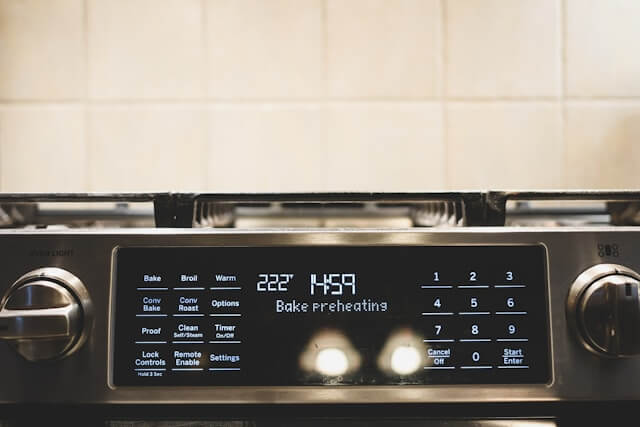
Many home bakers, especially beginners, think that once the oven beeps, it is fully preheated. But the reality is, when you hear that beep, it mostly indicates the air inside the oven, not the entire oven.
So even if you have set your desired temperature to around 220°C (425°F), it is still not ready yet for a proper bake,
The truth is, interior parts of the oven, like the walls, racks, and the baking surface, need a longer time to heat properly. And when you are planning to bake a pizza, it is very important for the baking surfaces, like stone, steel, or a baking sheet, to get fully heated up so that the bottom cooks instantly.
So if you try to bake right after the beep, you will end up with a soft and undercooked crust pizza. Make sure to preheat your oven for a few more minutes after the beep, and you’ll get better pizza results every time you bake.
What Happens If You Don’t Preheat Your Oven Long Enough?
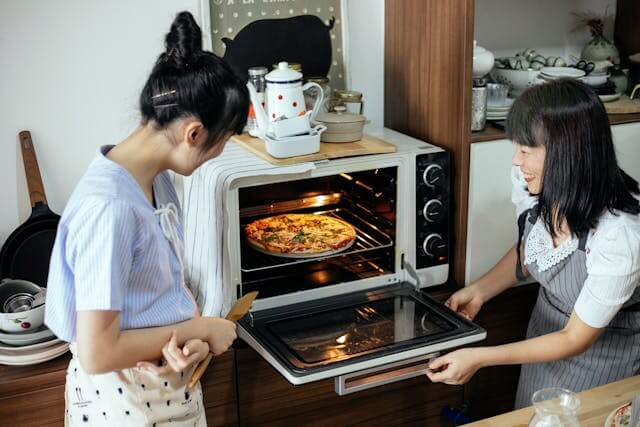
To bake a good homemade pizza, you need to preheat your oven long enough for it to cook properly. If you rush the preheating and don’t give your oven enough time, the bottom will not bake properly, and you will not get that crispy pizza crust everyone desires.
You will notice that some parts of your pizza, such as the toppings, will cook faster than the base. Furthermore, you may notice that the crust didn’t brown well and looks a bit dull.
Pizza baking works very differently from others. A pizza needs to start cooking from the moment you place it on the oven surface, and if it stays for a longer period, it will affect the toppings too.
Think of it this way, if the bottom cooks very slowly, the toppings like the sauce, cheese, and the ingredients will keep cooking for a long time.
Because of this, the cheese and the sauce can dry out, and the ingredients will overcook. Preheating your home oven is essential to avoid these common pizza-baking issues.
How to Know When Your Oven Is Actually Ready?
Many home bakers rely solely on the oven’s indicator (beep) and assume the oven is ready for baking. But it is not true. So how do you really know that your oven is ready for a proper pizza bake?
There are some useful steps you can take to check that everything is good to go. You can always open the oven door a bit and feel the heat by just keeping your hand near the door. But don’t touch it. And if the heat is strong enough, that means it is ready.
There are also some signals you might have noticed in your oven. In most ovens we use, we set a desired temperature, and when it reaches it, the oven turns off for a while, but it doesn’t mean the inside is fully heated. After a few cycles, the oven’s interior temp stabilizes, and it’s ready for proper baking.
However, there is a more reliable way to verify the temperature’s accuracy. Sometimes, in our home ovens, the displayed temperature is not accurate.
It is better to use an oven thermometer so you don’t have to guess. But you still need to give it enough time for the interior surfaces to heat up fully.
Common Preheating Mistakes
Some common preheating mistakes people already know about are trusting the oven beep and not preheating long enough. But there are other important factors that affect pizza baking, including texture, flavor, and overall baking results.
- Turning the oven on too late: You have prepared your dough, and the toppings are ready; it is time to bake. But most of us get impatient and don’t want to wait 30 minutes for the oven to preheat properly. It is a frequent mistake most people make, and this results in poor baking. Instead of rushing, be patient and let the oven heat up completely.
- Preheating at a lower temperature first, rather than the desired temperature: Getting the right temperature is one of the biggest factors when baking a homemade pizza. Some home cooks, especially beginners, set the oven temperature to around 180°C first, then increase it to 260°C. This way, you don’t just waste time. You also delay the preheating process. As a result, it slows down your baking time and also affects how the pizza cooks.
- Not using the correct oven setting: It is quite common for most of us to ignore the oven setting during preheating completely. People think that just turning the oven on and setting a desired temperature. That’s it, done. For instance, setting the oven to broil or grill mode only heats the top and cannot fully heat the oven for proper pizza baking.
- Blocking airflow inside the oven during preheating: Overcrowding the oven can affect preheating. If you leave too many unnecessary things inside the ovens, like pans or extra racks, it blocks the overall heat circulation. It simply means the heat won’t spread properly inside the oven.
- People assume all ovens work the same way: Every oven works differently: some take a few minutes to heat up, whereas others take an awfully long time to heat up completely. So if you don’t understand how your oven works, it will be hard to get a perfect baking result.
Quick Tips for Proper Preheating
Preheating the oven properly is a crucial step for baking pizza. Here are some quick tips that have worked for me over the years, and believe me, they have helped me achieve consistent, crispy-crust pizza.
- Turn on your oven early: You must give your oven enough time to heat up fully before baking.
- Always set your desired temperature from the start: Increasing the temperature later slows the preheating process.
- Give your oven a few extra minutes: Let the heat spread evenly throughout.
- Using the right oven setting: For a good pizza-baking result, use the convection mode to spread heat evenly throughout the oven, and use the broiler mode to finish the top browning.
- Don’t overcrowd the oven: Always keep only what’s required inside the oven and remove unnecessary items so the heat can circulate properly during preheating.
- Place your baking surface inside the oven while it preheats: Don’t try to preheat an empty oven, then place your baking surface. Always place it before you start preheating.
- Don’t just follow recipe instructions: Not every oven works the same way. Some get hot in a few minutes, while others take longer. So it’s better to understand how your oven actually heats up.
Final words
Preheating your oven is just a small step, but it makes a big difference when it comes to pizza baking. So always give your oven time to heat up gradually and avoid rushing it.
These few simple steps can help you to avoid common issues like a raw, soggy base and undercooked pizza. But yes, once you get things right, you will be able to make a perfect, consistent, crispy-crust pizza every time you bake.
